
Massive Gas Plant Expansion Proposed for Fluvanna County
There’s no other way to put it: for the global climate advocacy community, 2025 was a brutal year.
Locally in Charlottesville and Richmond it was no different, with two new gas plant proposals looming large in 2025. Both would be built to meet the energy demands of Virginia’s data center bubble, threatening the air and the water of millions of residents of Virginia and beyond.
More than any other single nation, what happens in the United States dictates temperature changes for the rest of the world, and from the first day of his inauguration, Trump’s administration began a relentless crusade against anything it interpreted as climate change mitigation work.
Climate justice is a global endeavour, and within the global landscape of genocide, ecocide, missed decarbonization targets and broken covenants, it is a daunting task to look to our local decision-makers to step in where our national leaders are failing. Still, we looked, we pushed, and we found truth in what we have believed since we first started in 2017: hope is not lost – it’s local.
Bringing the fight home
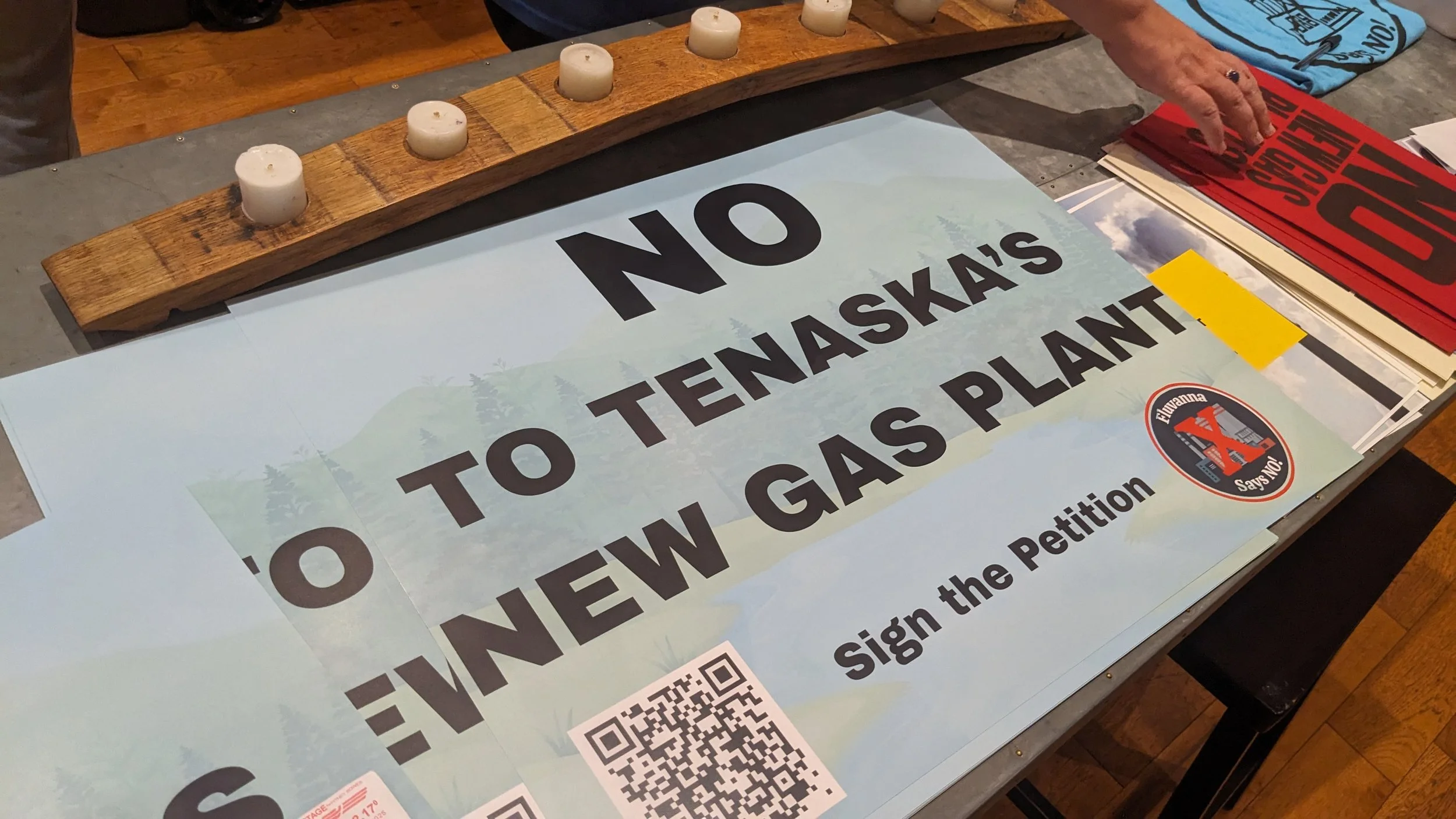
Right now, in Fluvanna County, hope is taking shape in the form of grassroots organizing by the Fluvanna Horizons Alliance against Tenaska, a private multi-billion-dollar Nebraska-based energy corporation which is seeking to more than double the size of its existing 1 GW plant sited right across the county line with Albemarle, near Scottsville.
Over the past few months, C3 has spoken to dozens of Fluvanna and Albemarle residents living close to Tenaska’s existing plant who were shocked to learn about both the proposal and the fact that such an enormous polluting plant is already in their backyard. While the plant is screened from view for many neighbors, hiding pollution does not change the harmful reality of Tenaska’s operations, and Tenaska is seeking to more than double this hidden impact.
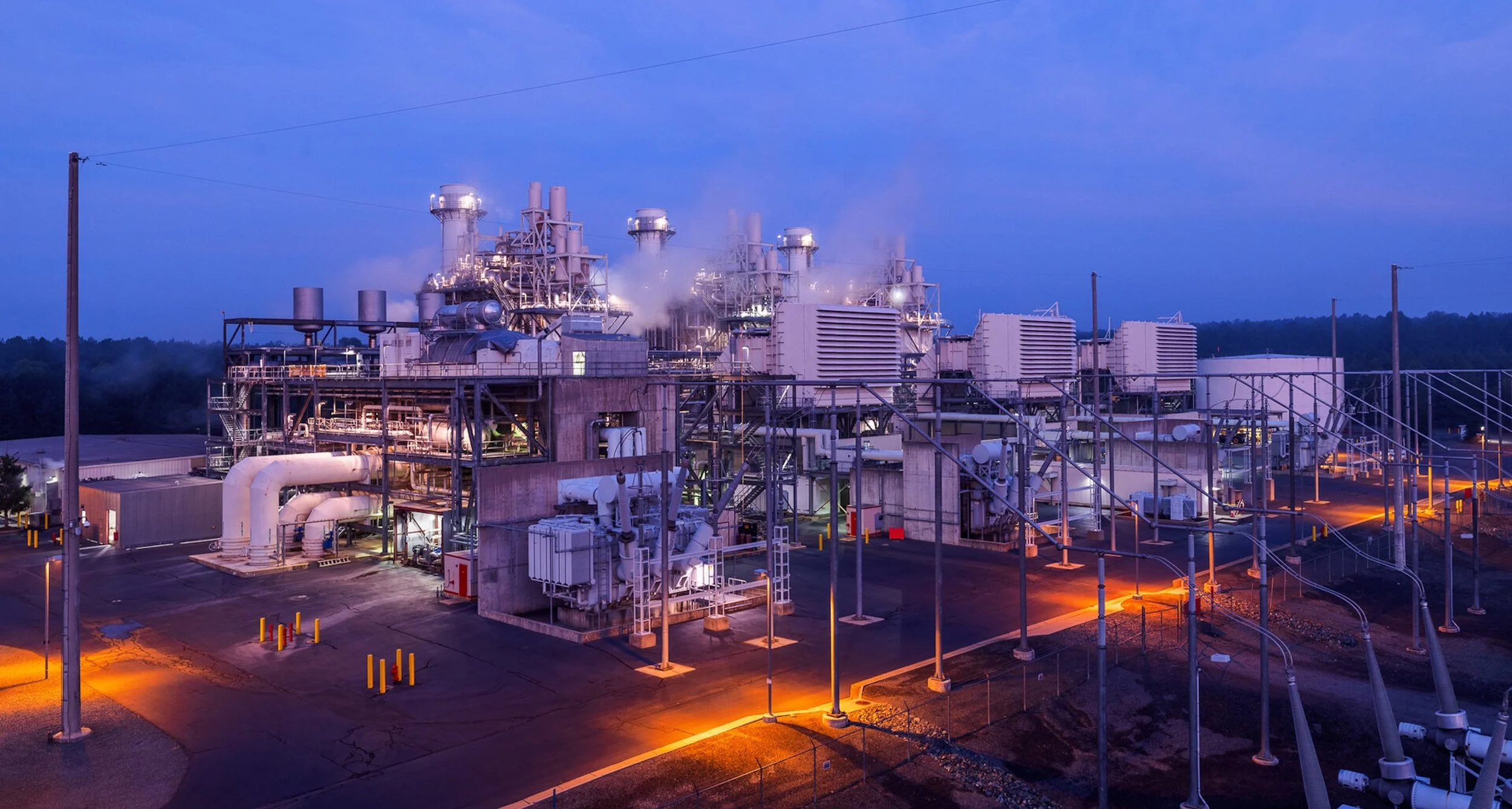
From Tenaska’s “FAQ” section on their Fluvanna “Expedition Generating Station” proposal’s official website
It’s hard to overstate the gravity of Tenaska’s proposal. Harvard University-based Domici Lab conducted an analysis, commissioned by our partners at the Southern Environmental Law Center and completed in late December 2025, which estimated that over its 30-year lifecycle, Tenaska’s proposed expansion would impose an estimated $27–50 million in health-related damages each year, corresponding to a total of between $500 million and $1 billion after 30 years.
Behind these cold numbers are real people: our neighbors, our kids, our elderly, our most vulnerable – ourselves. It’s not just Fluvanna residents who will be impacted, either: the report found that if Tenaska’s plant is approved, almost 4 million Virginians will suffer from increased exposure to particulate matter (PM 2.5), an air pollutant which leading global health experts have found has no known safe exposure level. Notably, Chesterfield County, whose residents have already been burdened with a fight against a 944 MW gas peaker plant, would receive the largest share of the total population-weighted exposure. Continuing a shameful legacy of who bears the brunt of environmental harm, the census tracts affected have a higher proportion of Black residents than Virginia at large.
Precedents for Alarm
The lack of opportunity for public engagement around this proposal has been disheartening. Since Tenaska’s proposal and request for a speedy special use permit was made public last year, with Fluvanna Supervisors having been under a non-disclosure agreement until about August 2025, residents have spoken out during town halls and public meetings, recorded by both local and national publications, of the incredibly negative impacts they’ve been faced with over the past 20 years that Tenaska has been operating in the County: air pollution, noise, health impacts, damage to ecosystems, water concerns, and longstanding issues around transparency and community trust. Fluvanna residents speak of being ignored, gaslighted, and given the run-around by a corporation that markets itself as an “ethical, highly respected, socially responsible company”.
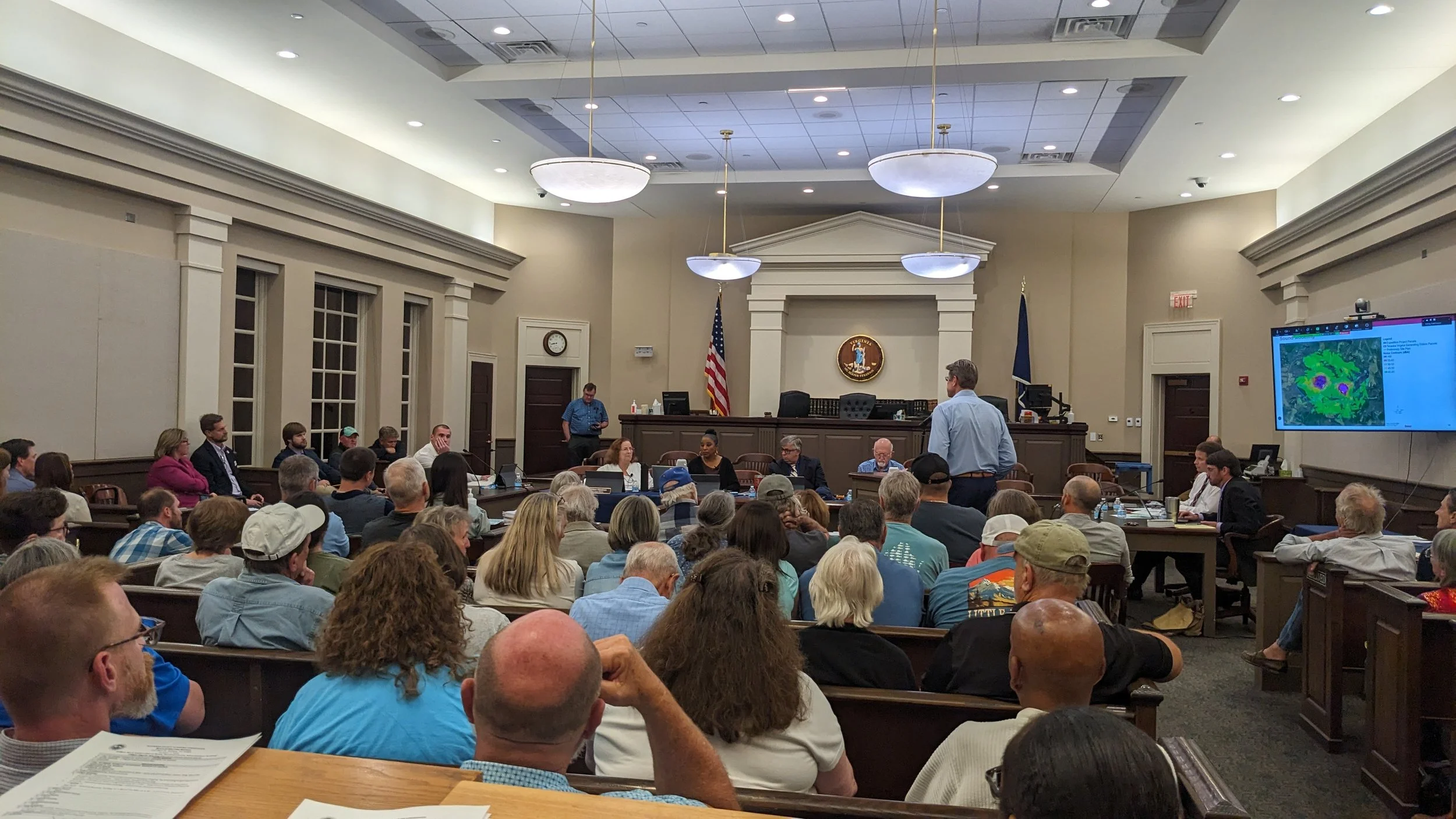
Tenaska Project Manager Jarod Pitts presenting on the proposal to the Fluvanna County Planning Commission in Palmyra, October 6, 2025
In November, Tenaska suggested it would fund up to $5,000 for an environmental review, most likely to be conducted by $300-per-hour consultant David Paylor, a controversial former DEQ director whose time at DEQ included instances of accepting gifts from Dominion Energy. Fewer than 20 hours are insufficient to conduct a meaningful environmental or health-impact study, and this suggestion cannot be viewed without cynicism: it is not in Tenaska’s self-interest to voluntarily conduct a thorough impact study with the community that it proposes to further harm.
A further suggestion by Tenaska that it would set up a $5 million “Good Neighbor Fund” to gain the goodwill of residents in close proximity to the plant is equally alarming: $5 million represents a mere 0.5-1% of the Harvard study’s estimated health impacts from the plant, which would include people living far outside the jurisdiction of Fluvanna County. It’s hard to see this “Good Neighbor Fund” as a sincere effort to compensate neighbors for the staggering long-term health risks posed by a new gas plant.
Your Voice Is Needed
The direct negative health and environmental impacts of gas plants are not only known and measurable, they are avoidable. Fluvanna’s leadership can shut this down now, but they need both the support and pressure of the local community to do so. Fluvanna residents’ voices will have the greatest impact on the Planning Commission’s decision, but the immediate and generational impacts of pollution do not stop at the Fluvanna border.
C3 and our partners in Fluvanna and across the region are calling on our community to show up, and keep showing up: the fight against fossil fuel expansion is here, now, and it has a clear demand: Fluvanna County must reject Tenaska’s proposed expansion.
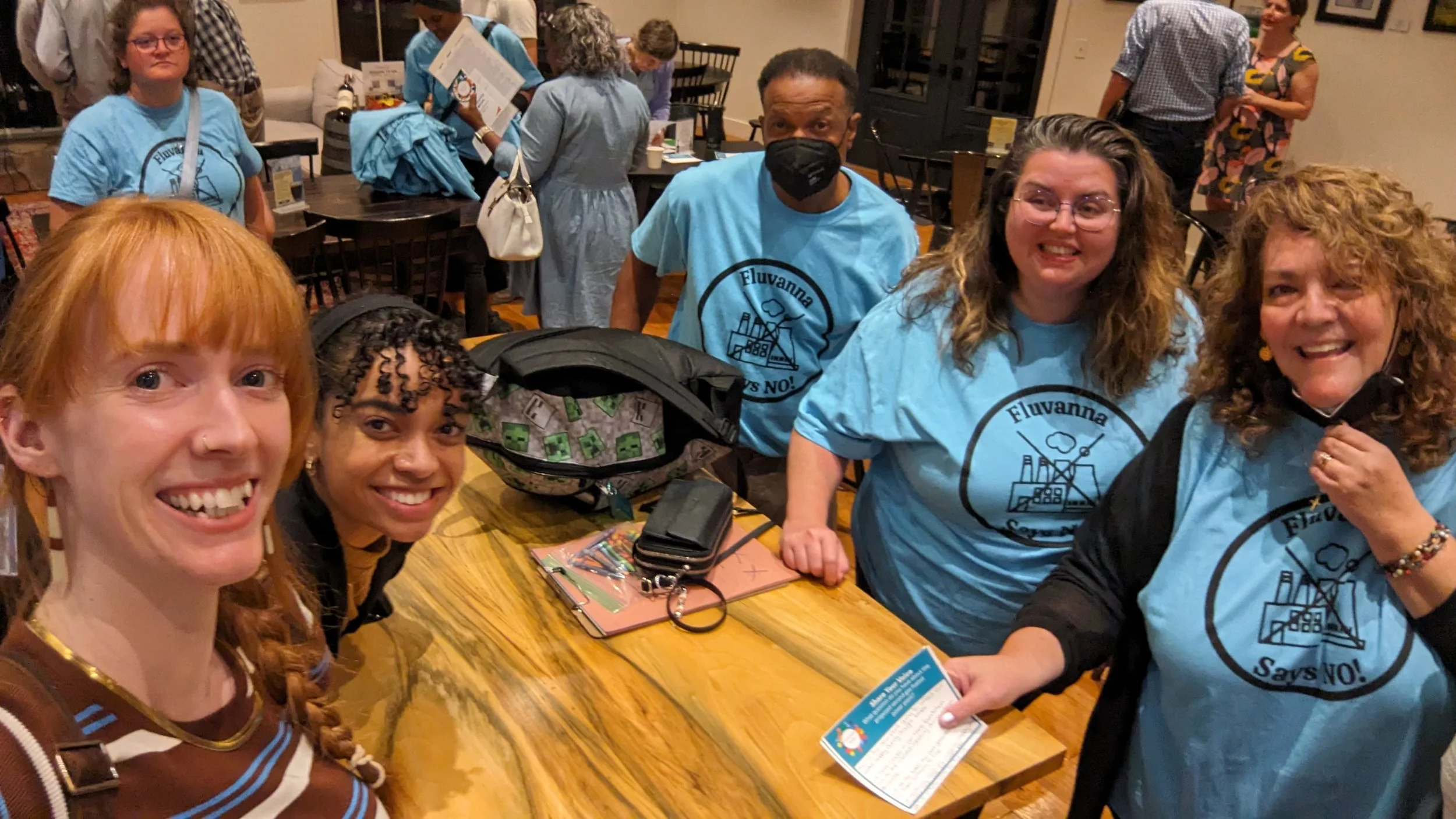
Sadhbh O’Flynn from C3 with members of Fluvanna Horizons Alliance at a community meeting to discuss residents’ concerns in Fluvanna County, September 23, 2025
For updates on this campaign, please keep an eye on our campaign landing page, which spotlights upcoming events like the health impacts webinar on Thursday, January 8, and advocacy opportunities like the Fluvanna Planning Commission hearing in Palmyra on Tuesday, January 13.
