HVAC Planning Could Get You Out of a Couple of Jams
This blog is part of a series based on our Communities LEAP (Local Energy Action Program) project, completed in collaboration with the City of Richmond Office of Sustainability and the National Renewable Energy Laboratory (NREL).
Imagine: It’s the holiday season, when your business draws in 20-40% of its annual revenues. It’s a Saturday morning right before Christmas, one of the biggest shopping days of the year. You arrive at your location. It's freezing inside, and water is leaking on the floor from a burst pipe. Your HVAC company responds to your emergency call (for an extra fee!), and tells you your 18-year-old heating unit has failed, but they can’t get a replacement until next week. Whether you own or rent your space, how many business days can you afford to lose to a failed HVAC system?
Unfortunately, abrupt HVAC failures are all too common.
Two out of every three commercial buildings in Richmond have not updated their HVAC equipment since 2010.
For buildings under 10,000 square feet, the number without updates since 2010 jumps to four out of five.
Given that typical HVAC equipment lasts about 15 years, this means that a majority of our local commercial businesses and nonprofit organizations could be facing some big-ticket upgrades in the very near future.
Without planning, affected businesses are more likely to install replacements that are overpriced, oversized, and less efficient (read: more expensive to operate) than the alternatives. Without planning, owners and tenants are subject to equipment failures that occur during times of high demand and maximum inconvenience (on a weekend or holiday), forcing installation of whatever equipment is available, even if it isn’t optimal for the business. Without planning, owners and tenants have to make last-minute capital decisions on equipment that will sit in place, regardless of how well it suits the organization’s needs, for the next 15-20 years.
But there’s another way: understanding the basic options, and making a plan.
How to make an equipment plan
A plan doesn’t need to be an elaborate undertaking. It includes 4 simple steps: determining equipment age, determining your responsibility for equipment replacements, getting preliminary quotes for replacement (especially if the equipment is more than 15 years old); and making a financial plan.
Specific steps:
First, confirm the age of existing equipment (this can include water heaters, refrigeration, or other major equipment, not just HVAC).
Resources to do this:
Equipment documentation
Your knowledge of the building (e.g., if it was built or remodeled within the last 15-20 years, your equipment likely dates from that period)
Your landlord and/or property manager
Occupants who have been in the building for a long time
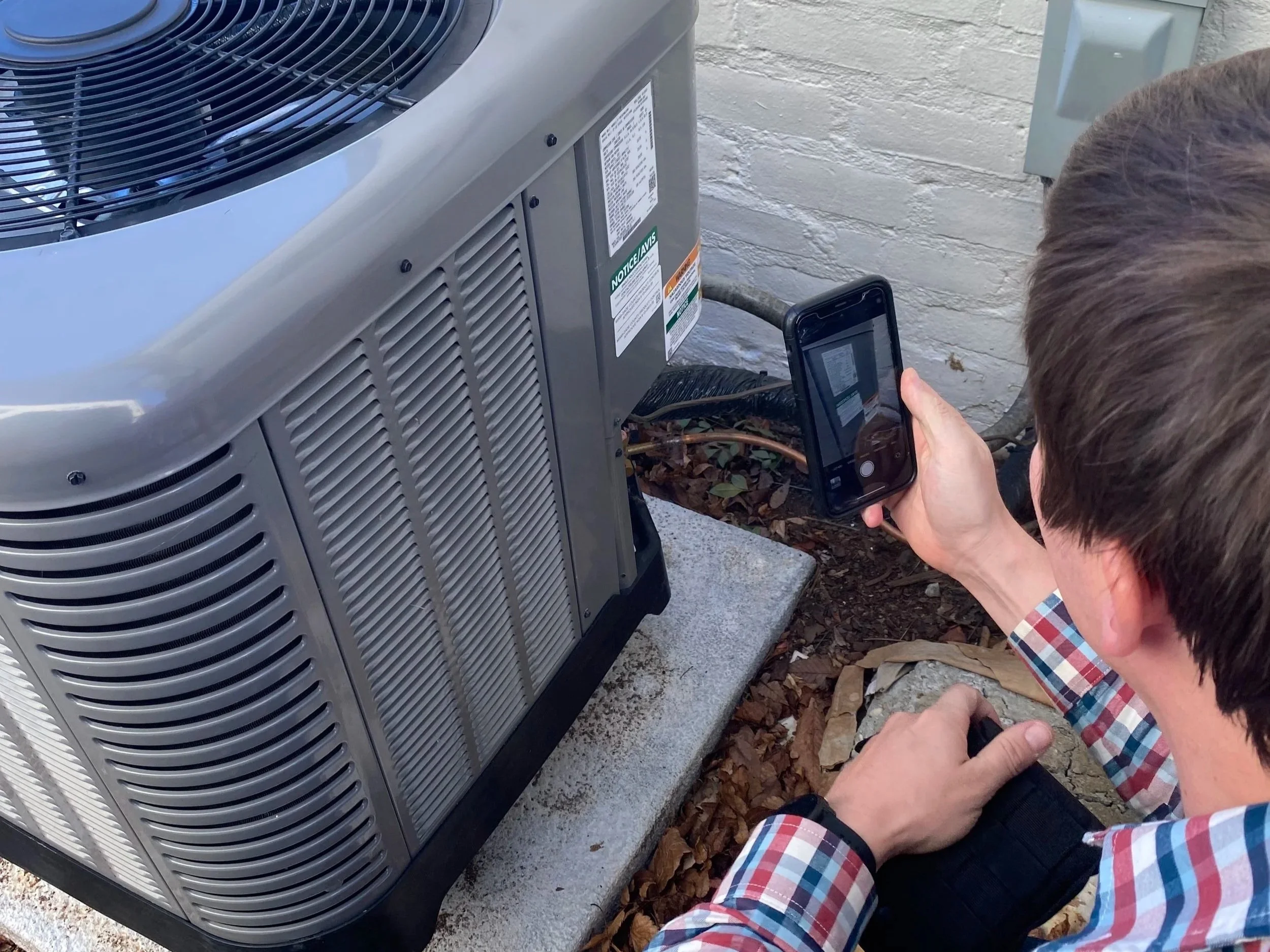
Equipment nameplates, if accessible: typically on the side, back, or interior (for refrigeration). Look for a manufactured date. No date? Snap a picture of the equipment and the nameplate, and send it to corp@theclimatecollaborative.org and we can help you track it down.
If this sounds complicated, send whatever info you can gather to the email above and we’ll do what we can to help you figure it out.
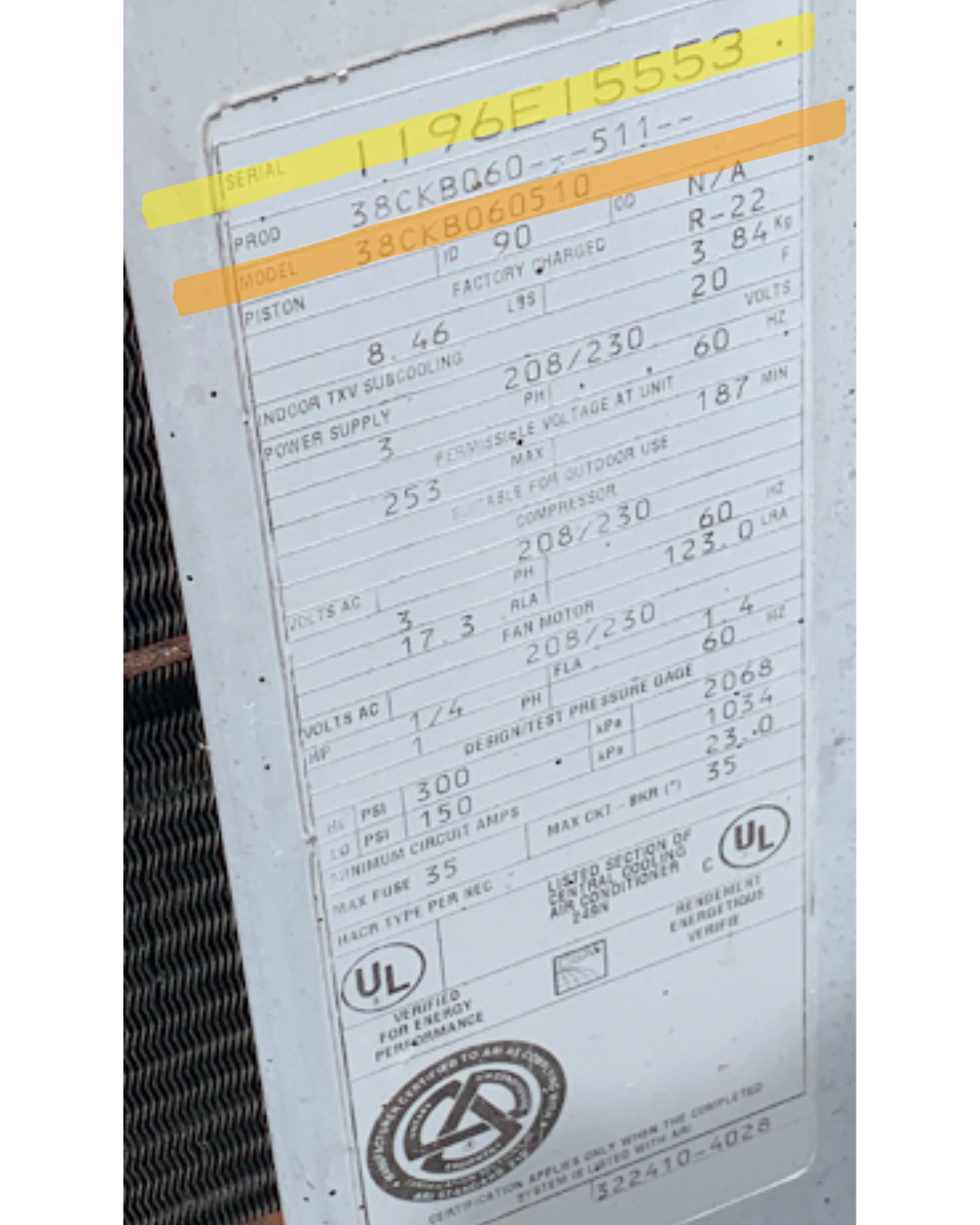

HVAC equipment nameplate with manuf. date
“Equipment decisions really do matter. Heat pumps, which provide both heating and cooling, and which operate at roughly 300% efficiency (compared to around 95% efficiency for a modern gas furnace or boiler), are excellent replacement options in most situations. These technological marvels - invented decades ago and now common even in cold climates - cost far less to operate than the alternative, especially if you’re replacing electric resistance, propane, or fuel oil heating. Any up-front price difference for heat pumps will be offset by operating savings within just a few years.”
Second, if you lease the building, confirm what your lease says about major repairs or replacements.
Do you have any responsibility for equipment replacements? Regardless of the answer to this question, confirm what will be involved in addressing major equipment issues - especially if you’ve verified the equipment is near the end of life.
Third, use the information on equipment age to create a basic strategy.
Less than 10 years old: No need for current action; just note the age and plan to revisit the issue when the equipment is closer to 15 years old. Conduct basic annual maintenance through an HVAC service provider to keep the equipment running as long as possible.
10-15 years old: If you rent, talk to your landlord about how they will approach equipment replacement when the time comes, and ask if they will consider equipment with mid-range efficiency (see link with specifications below) to help keep energy costs down. If you own, include the system in any future expenditure planning. Whether you rent or own, conduct annual maintenance as noted above.
15-20 years old: Initiate steps noted above in #2, and also seek preliminary quotes for equivalent and mid-range efficiency replacements. Ideally, request quotes during the next “shoulder” season (spring or fall, when demand for HVAC services is lower). See our basic efficiency guidelines and suggested language for contractors using C3’s info sheets:
20+ years old: Initiate steps noted in #2 and #3 above, but accelerate request for quotes to ensure you have the information needed to make a replacement decision at any time. Based on the contractor’s assessment of equipment condition, consider initiating replacement immediately to avoid catastrophic interruptions.
Fourth, make a financial plan.
If your equipment is nearing 20 years old, request quotes from trusted contractors (C3 can help with this if needed) so you know how much you need.
If equipment is under 15 years old, it may be premature to get quotes, but getting a ballpark estimate will help you start planning (and setting aside money as suggested below).
If you’re responsible for replacement costs (because of your lease or because you own the building), do what you can to begin setting aside money in a capital fund. For many non-institutional/small-scale operations, even $50-100/month will help.
Even if you’re not responsible for replacement costs, remember: the person most affected by an inefficient HVAC system is you. Mid-range efficiency systems can cost more up front, but the operating cost - which you pay for in your monthly utility bills - is far less. Offering to pay the cost difference between the option with the cheapest up-front cost and the option that will save you money every month on your bills may help convince your landlord to go more efficient. So setting money aside each month in a capital fund is still a good idea, and will very likely save you money in the long run.
Familiarize yourself with existing utility rebates and tax incentives. A good place to start is the Energy Resource Hub, which is focused on Charlottesville but includes useful information for the whole state of Virginia.
Explore low-cost loans through community development financial institutions (CDFIs; for example Bridging Virginia), grants (like these available in some areas of Richmond), cash-out mortgage refinancing, or other resources to offset the costs.
Once you’ve completed these steps, you can file the information away until you’re closer to the likely end of equipment life: You’re ready!
This can sound daunting, but in many cases the time required will be minimal, and it will prepare you for what can otherwise be a highly disruptive, expensive undertaking. It will also prepare you to reduce your environmental footprint, shift your building to clean renewable energy, reduce your utility costs, reduce pollution, better serve your business, and keep your clients happier too.
Ready to do something now? Work with our HVAC + Solar Business Cohort, and qualify for 1:1 technical assistance + mini-grant funding! Take the first step here.