
Fact or Fiction? What We’ve Heard versus What We Know Throughout Richmond’s Zoning Rewrite
How Zoning Creates Opportunity or Inequity (Part III)
The City of Richmond is over a year into Code Refresh, an initiative to “refresh” the City’s 50+ year old zoning code. Throughout the process, C3 has heard concerns from community members about the impact that proposed changes – particularly those related to increased housing density – may have on climate-related issues, ranging from solar access to increased traffic. For the third installment of C3’s Climate-Smart Zoning blog series, we dig deeper into these claims and explore how Code Refresh can help us deliver on housing needs and create a more sustainable city together.
Claim: Increasing density and the height of buildings will prevent solar development and block sunlight from roofs.
What We Know: Tall buildings can potentially block sunlight and reduce solar access for neighboring buildings for a portion of the day. However, there is no significant evidence to support that the changes proposed in Code Refresh will prevent widespread solar access across the City. Contextual building height restrictions, setback requirements, building coverage limits, and the density patterns proposed in the second draft provide multiple buffers that limit the impact of shade from one building to the next.
Rooftop solar is currently allowed by right in all residential districts. However, relatively few residents have been able to take advantage of the benefits of rooftop solar. Primary barriers preventing widespread access to rooftop solar include the high upfront costs of solar panels and installation, and the fact that the majority of Richmond residents are renters who would need permission from their building owner. The City, building on existing zoning, should work to streamline the deployment of residential solar energy to low-income households and rental properties through financing, workforce development programs, and market development initiatives. They should also consider using incentive zoning that allows developers density bonuses (among other potential perks) if their project includes on-site solar. In December 2025, the City of Richmond - in partnership with C3 - was awarded a grant to explore and secure local funding for clean energy projects, specifically growing the solar market. C3 strongly believes that we can equitably expand solar access in Richmond while meeting our housing needs.
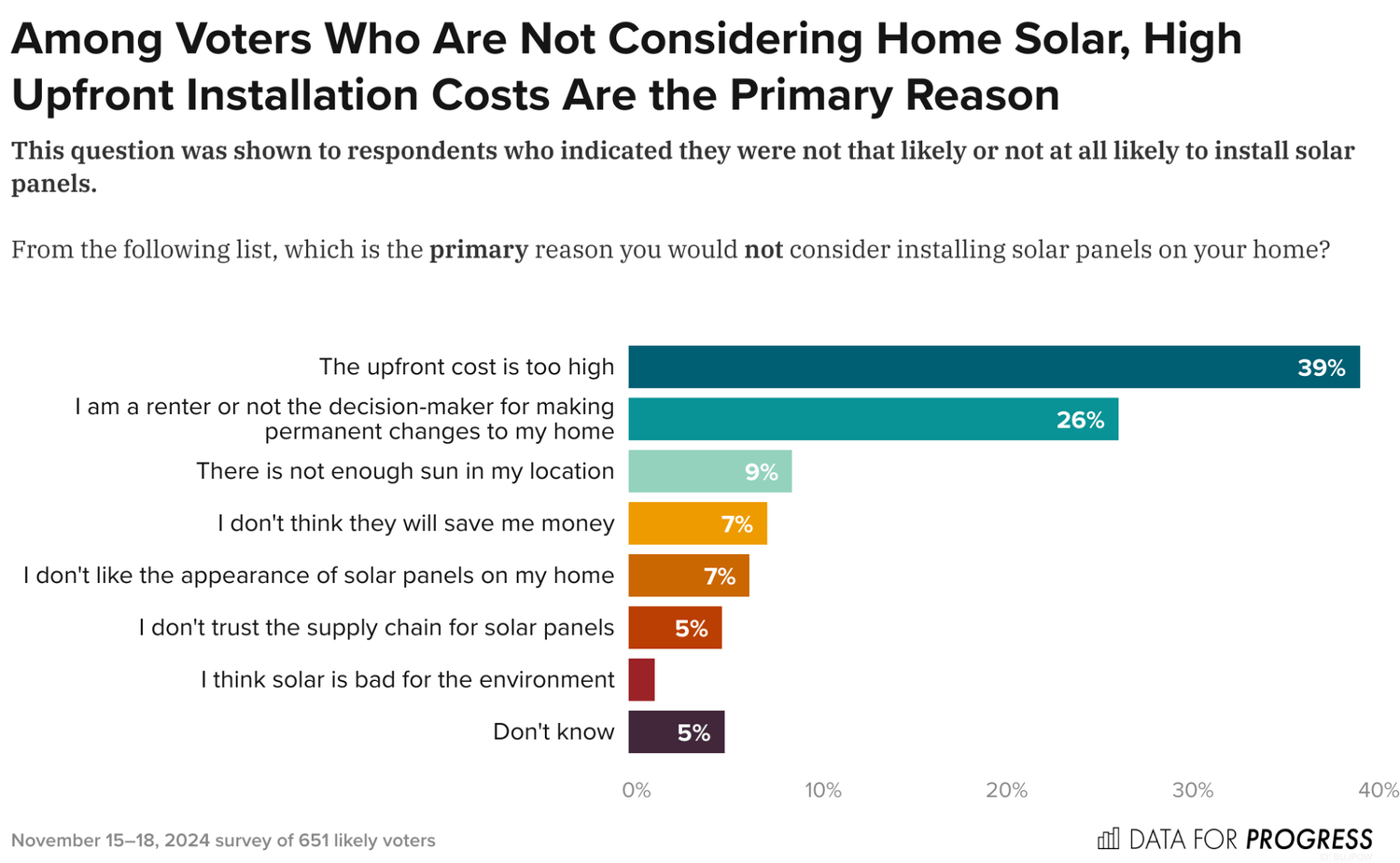
Image 1: Graph showing the primary reasons why voters said they were not likely to install solar panels, with high upfront costs and rental limitations ranked at the top. Source: Data for Progress.
Claim: Increasing housing density increases energy burden (% of household income spent on energy bills) and costs.
What We Know: Increased housing density reduces energy consumption, residential energy bills, and carbon emissions. C3’s Richmond energy burden study found that households living in multi-unit buildings have significantly lower energy costs than single-family homes, partly due to smaller average sq footage and better insulation; a single-family detached home in Richmond averages over $3000/year, while a building with 50+ units averages $1090/year per household. Single-family homes and mobile homes have the highest energy burden across all building types. From a climate perspective, single-family homes use the most energy per household and often contribute to urban sprawl, an environmentally unfriendly planning pattern that favors unchecked outward development, large lot sizes, and car dependence. Increased density allows for more efficient land use and decreased energy consumption, reducing overall emissions and helping the City hit its climate targets.
Claim: Increasing housing density will lead to more cars, less parking, and more pollution.
What We Know: Transportation is the leading cause of greenhouse gas (GHG) emissions in Richmond and across the United States. From a climate perspective, the City should be doing everything possible to reduce private vehicle use and related emissions through its zoning reform. While we recognize many households still use private vehicles, C3 rejects car-centric planning that continually ignores the needs of those unable to afford or access a car (see What Are The Needs? section), and works towards a future in which all residents can access the people and places they need without a gas-powered vehicle. Building housing and mixed-use development near transit corridors and bus routes makes public transit more accessible and encourages ridership, potentially leading to fewer vehicles per household.
However, new transit investments - such as Richmond’s proposed North–South Bus Rapid Transit route - can also increase housing demand, potentially driving up prices and contributing to gentrification or displacement. The City must prioritize neighborhood stabilization and tenant protection policies to ensure existing residents benefit from and are not displaced by new development. Density and proximity to services also reduce vehicle miles traveled (VMT) by cars overall, even in more sprawling areas. Investing in multi-modal transportation options - such as creating sidewalks, designating bike lanes, and expanding bus frequency and routes - decreases reliance on cars and leads to fewer emissions, pollution, and traffic.
Claim: Increasing housing density will reduce tree canopy coverage and increase urban heat.
What We Know: Development in and around cities can impact tree canopy depending on the regulations and protections in place. Urban tree canopy and other forms of green infrastructure can play a critical role in making cities cooler and climate-resilient amidst a warming climate. However, building more housing and preserving or expanding tree canopy are not at odds with one another, and zoning laws can encourage both.
The second Code Refresh draft includes new tree canopy protections in its Development Standards, which set requirements for the minimum percentage of tree canopy on a parcel. Residential detached districts (RD-A and RD-B), areas home to the majority of the city’s tree canopy, have the strictest requirements for preserving or planting trees. Southside ReLeaf’s recent Roots to Roofs report provides a series of recommendations for preserving tree canopy while also building affordable housing, some of which are supported by legislation at the 2026 General Assembly. These include expanding local authority to conserve mature trees during development to every Virginia locality and expanding tax credits and Low-Income Housing Tax Credit (LIHTC) scoring advantages to redevelop underused and vacant sites into affordable housing, rather than clearing forests or natural areas for new construction. While Richmond’s tree canopy lost around 199 acres from 2014 to 2021, urban sprawl - which favors single-family neighborhoods and car dependency - caused neighboring counties such as Chesterfield County to lose thousands of acres of trees. Prioritizing mixed-use, dense housing in already-developed areas (as per Code Refresh’s Priority Growth Nodes framework) encourages infill, creates housing closer to transit routes and services, and reduces vehicle pollution. Additionally, the City should consider creating incentives or requirements in zoning and development processes for green infrastructure, including cooling strategies.
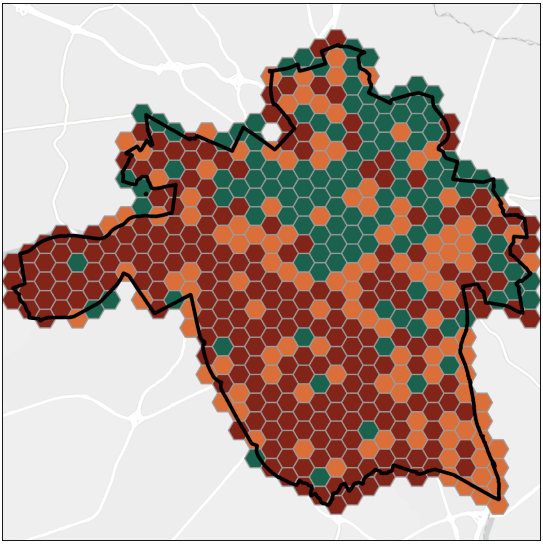
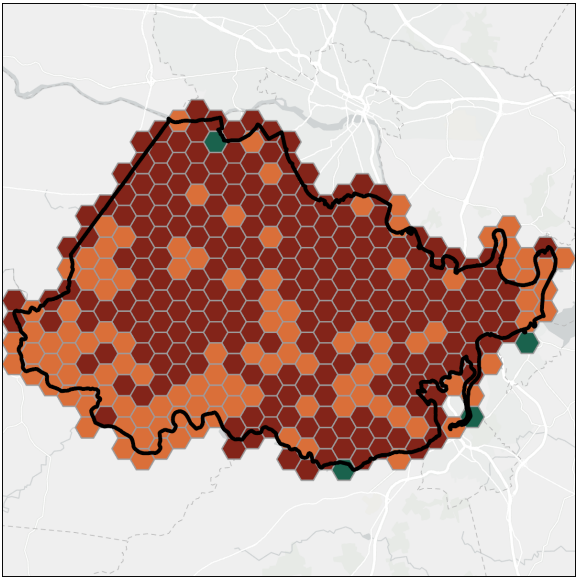
Image 2: Richmond’s tree cover change from 2014-2021 (loss of 199 acres, pictured left) compared to Chesterfield County’s tree cover change (loss of 3400 acres, pictured right) from the same period. Red represents > 0.1 Acres Net Tree Cover loss, orange represents minimal tree cover change, and green represents > 0.1 Acres Net Tree Cover gain. Source: Chesapeake Tree Canopy Network.
Claim: Increasing housing density will overtax our water infrastructure. We must improve our water infrastructure before we can rezone to increase density.
What We Know: The Richmond water crisis in January 2025 underscored the need to improve the city's water and wastewater infrastructure. Multiple residents have raised concerns about the capacity of City infrastructure to handle housing growth. Department of Public Utilities Director Scott Morris has stated that the City can handle denser development. For projects that require some type of upgrade - such as a pipeline expansion - those needs will be identified during the permitting process, and the cost will be borne by the developer. Additionally, the zoning recommendations outlined in Richmond 300 (the basis for Code Refresh) were vetted and approved by the utilities and public works departments. While the City must prioritize infrastructural investment to support the well-being and health of residents, there is not adequate evidence to support that additional and incremental housing density will lead to system failures.
Use what you know, take action!
The City has released the second draft zoning map for public feedback and review. Residents are encouraged to leave comments on both the maps and the use regulations linked below, as well as email comments to the Planning Department. Provide feedback on the proposed zoning changes by March 1st!
Draft Two Map (Interactive)
Draft Two Zoning Regulations (Interactive)
Residents can also email written feedback and questions to richmond300@rva.gov or their City Council members (find your Councilmember contact info here).
Attend An Event!
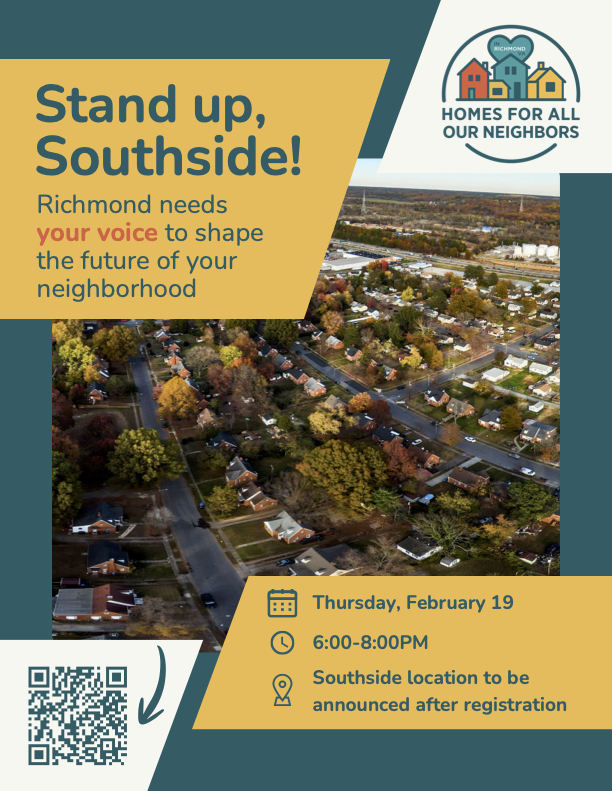
C3 is a member of the Homes for All Our Neighbors coalition, a group of organizations fighting for a more equitable Code Refresh. The coalition is hosting an event on February 19th for Southside residents to learn more about Code Refresh and voice their concerns to City Council. Dinner will be provided and Spanish interpretation is available.
Stand Up, Southside! Your Voice in Richmond's Zoning Future
February 19th from 6-8PM, location shared after registration.
Learn more about the event and register HERE.