
As Tenaska Seeks DEQ Permits, Fluvanna Community Health Concerns Remain Unaddressed
Fluvanna area residents are continuing to voice health concerns as Tenaska, a Nebraska-based private energy corporation, seeks approval from Virginia's Department of Environmental Quality for a proposed second huge gas-fired power plant in an environmental justice-designated census tract.
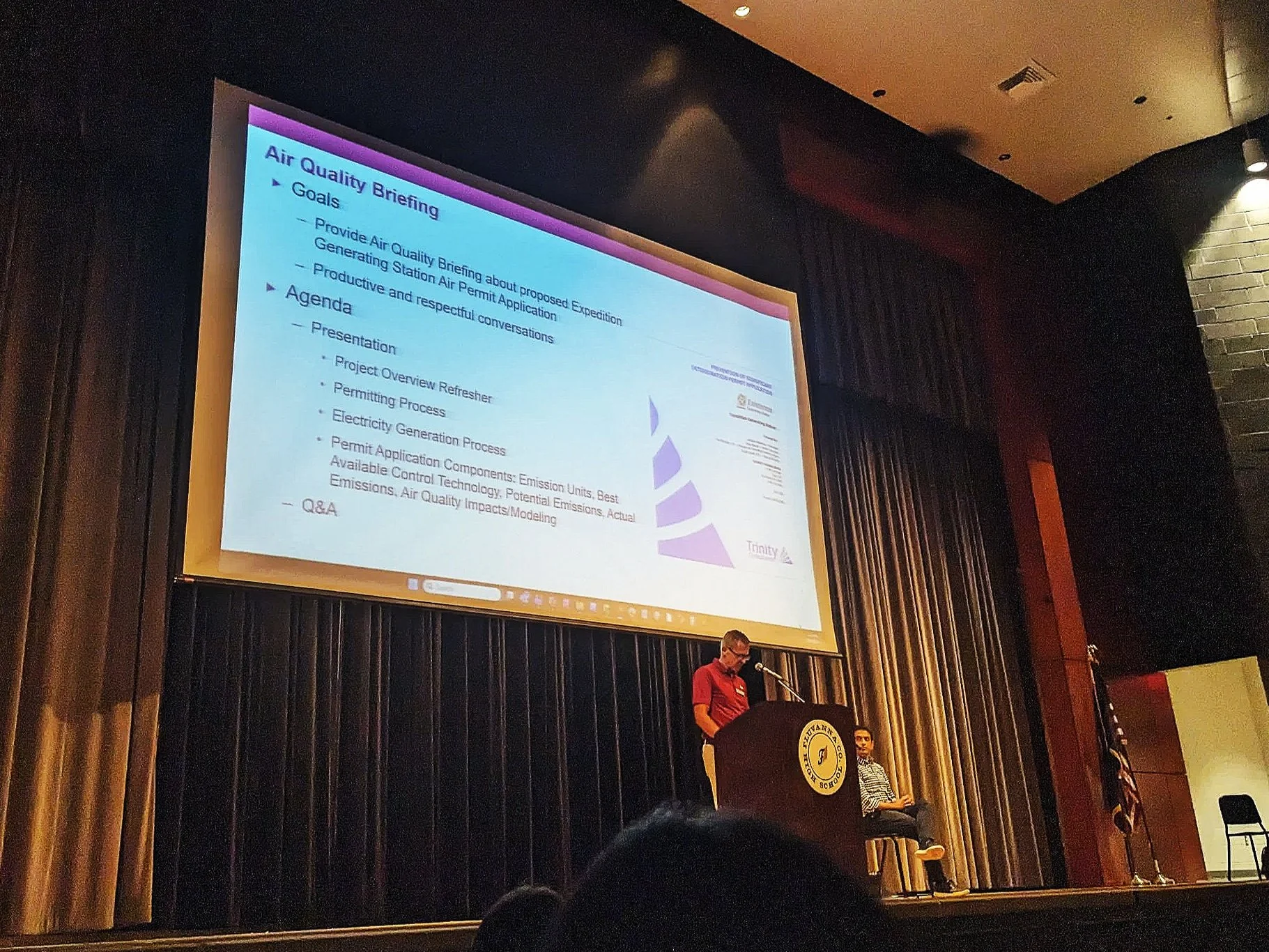
Tenaska setting the agenda for Fluvanna residents at a required DEQ air quality impact meeting, July 28, 2026
The fight over Tenaska’s proposed 1,540-megawatt methane gas plant in Fluvanna County is entering a new phase.
Earlier this year, the Fluvanna County Board of Supervisors voted to approve Tenaska’s proposed Expedition Generating Station, despite sustained opposition from residents, local organizations, and regional climate advocates. That decision moved the project forward, but it did not end the review process – and it certainly did not resolve the concerns that have surrounded the proposal from the beginning. Research conducted by a Harvard University Lab modelled the health impacts of the proposal and estimated that the plant would cause between 2-3 extra premature deaths per year in the region around the plant as a result of air pollutant PM2.5, a pollutant with no known safe exposure limit.
Tenaska must still secure state and federal permits before construction can begin, including an air permit from the Virginia Department of Environmental Quality (DEQ). With that process now underway, on July 28, 2026, Tenaska held a legally-required public meeting as part of its application for a Prevention of Significant Deterioration (PSD) air permit from DEQ.
Health Concerns Remain Front and Center
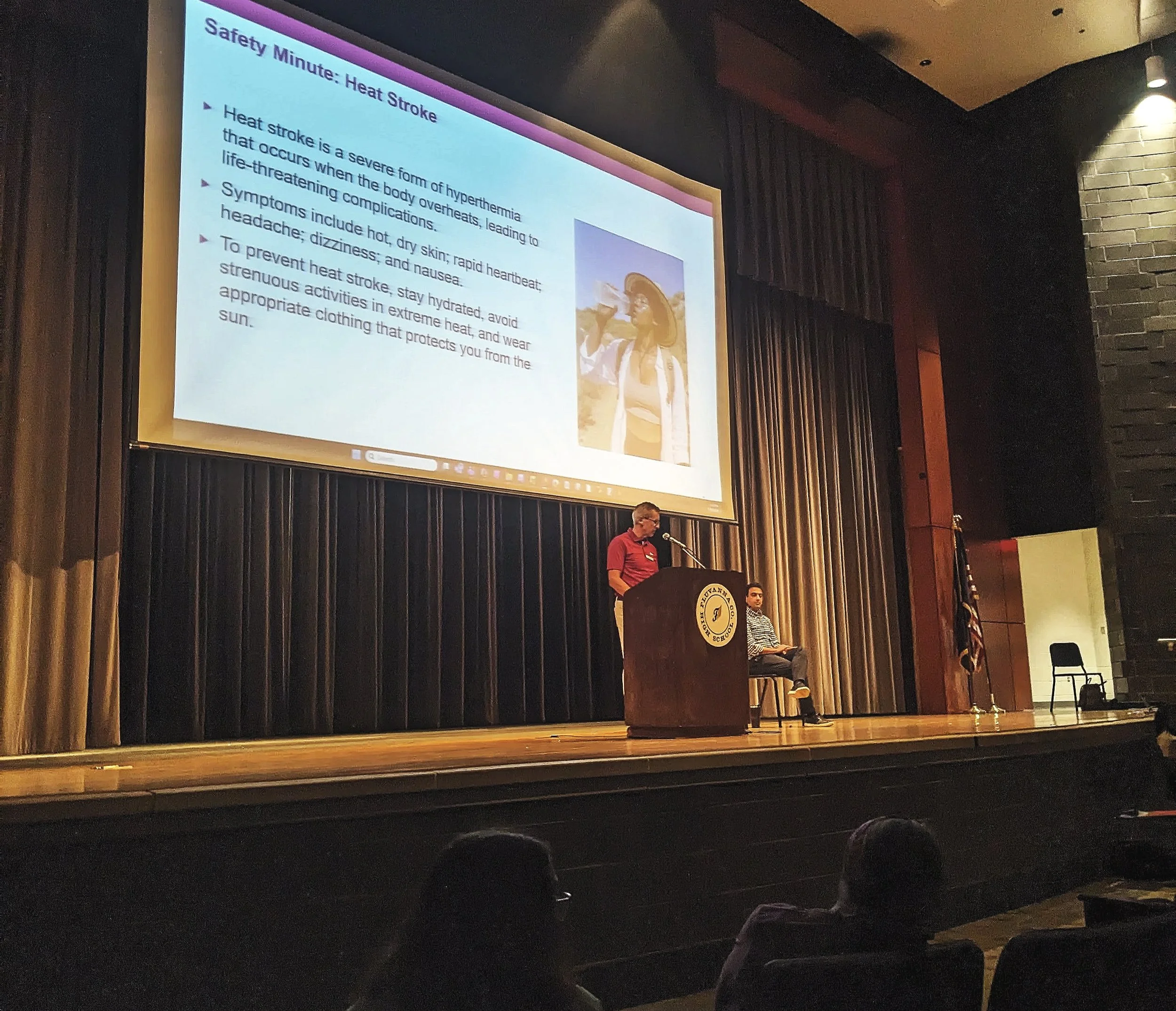
Tenaska opened its gas plant air pollution briefing with a PSA on heat stroke — the risk of which is increasing due to climate change.
The PSD process is an important part of the project’s environmental review. Tenaska’s application will be evaluated by DEQ, which will ultimately determine whether the proposed facility meets applicable state and federal air quality requirements, but for Fluvanna residents and their neighbors in the surrounding region, the question is about more than whether Tenaska can meet regulatory requirements.
There is an obvious gulf between the priorities of a multibillion dollar out-of-state fossil fuel energy corporation and the residents already impacted by its existing plant, which is in a DEQ-designated Environmental Justice census tract. This became very clear during the July 28 meeting after a long technical presentation, during which attendees were told by Tenaska that air quality protections are less strict in rural environments like Fluvanna than in national parks because the parks “deserve” higher levels of protection.
After the presentation, residents raised still-unanswered questions about the potential health and environmental impacts of additional emissions on the community. An especially profound and personal moment came when a Fluvanna resident, Tammy, challenged Tenaska representatives to tell her that the existing gas plant, sited two miles from her house, was not a factor in her development of environmental cancer.
Her efforts to uncover why she developed this cancer when coming factors like genetics and lifestyle were ruled out concluded that it could only have been environmental conditions that caused it.
“You cannot tell me that none of you were smart enough to go and do the research that I have done and everybody else has done on this,” she said.
The exchange was a stark reminder that, for local and regional residents who would live with the consequences of this project, the DEQ review is not simply a technical exercise. It is an opportunity to ensure that community concerns are taken seriously as the agency evaluates Tenaska’s application.
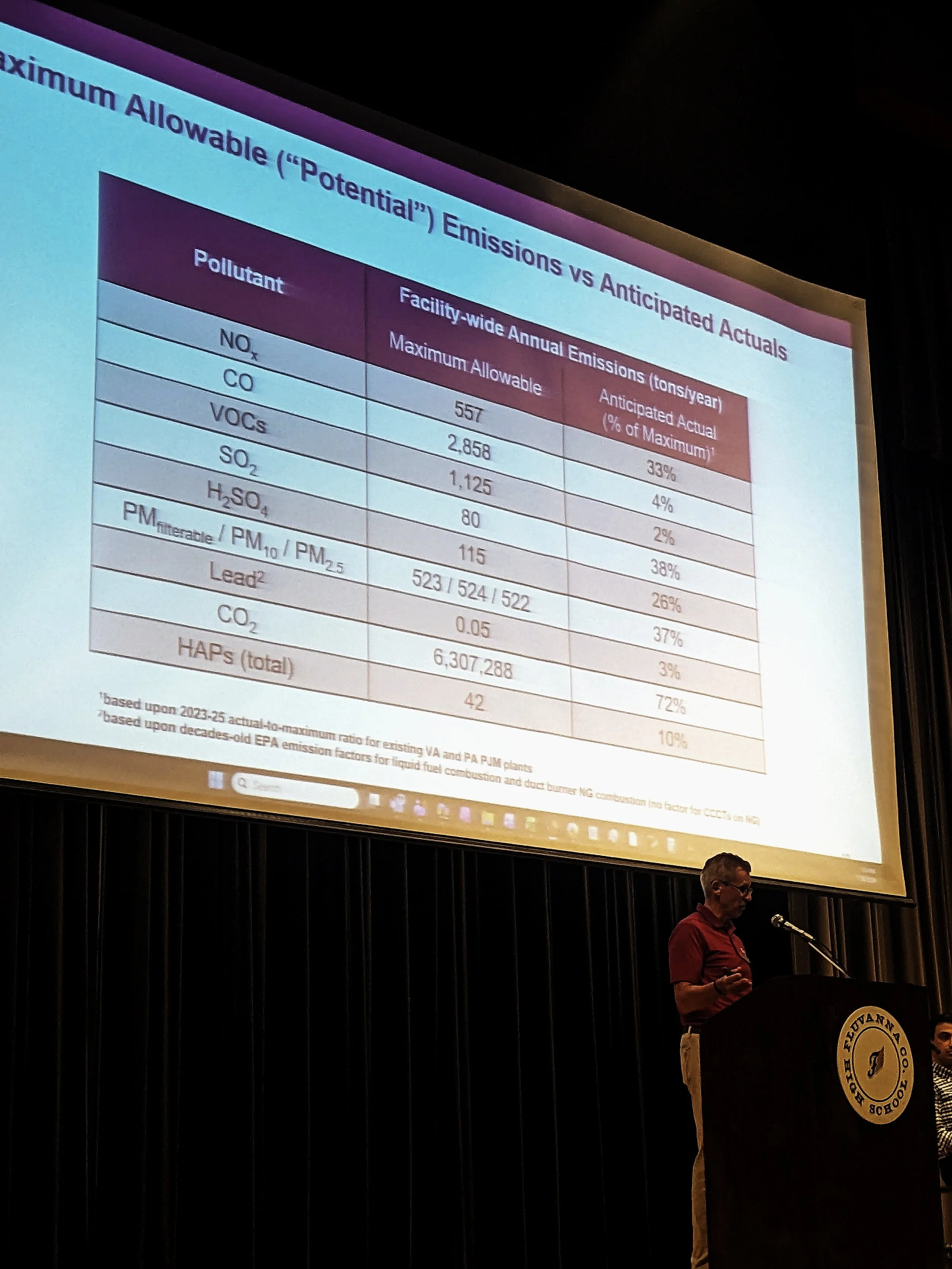
Tenaska anticipates emitting three times the amount of carbon as the entire 2022 Albemarle County-wide carbon inventory (1.4m tons) from its proposed second gas-fired power plant in Fluvanna County
What Happens Next
The DEQ review is only one part of the permitting process Tenaska must complete before construction could begin. DEQ will review the company’s air permit application, including its emissions modeling and proposed pollution controls.
If the agency issues a draft permit, there will be additional opportunities for public review and comment before a final decision is made. A public hearing will also be scheduled as part of that process.
This next stage provides another important opportunity for Fluvanna residents and regional advocates to scrutinize the project and make their concerns heard. The Board of Supervisors’ vote moved Tenaska forward, but it did not settle whether the plant will ultimately be built.
C3 will continue to share updates as new information becomes available, and will alert residents when there are new opportunities to participate in the DEQ process.
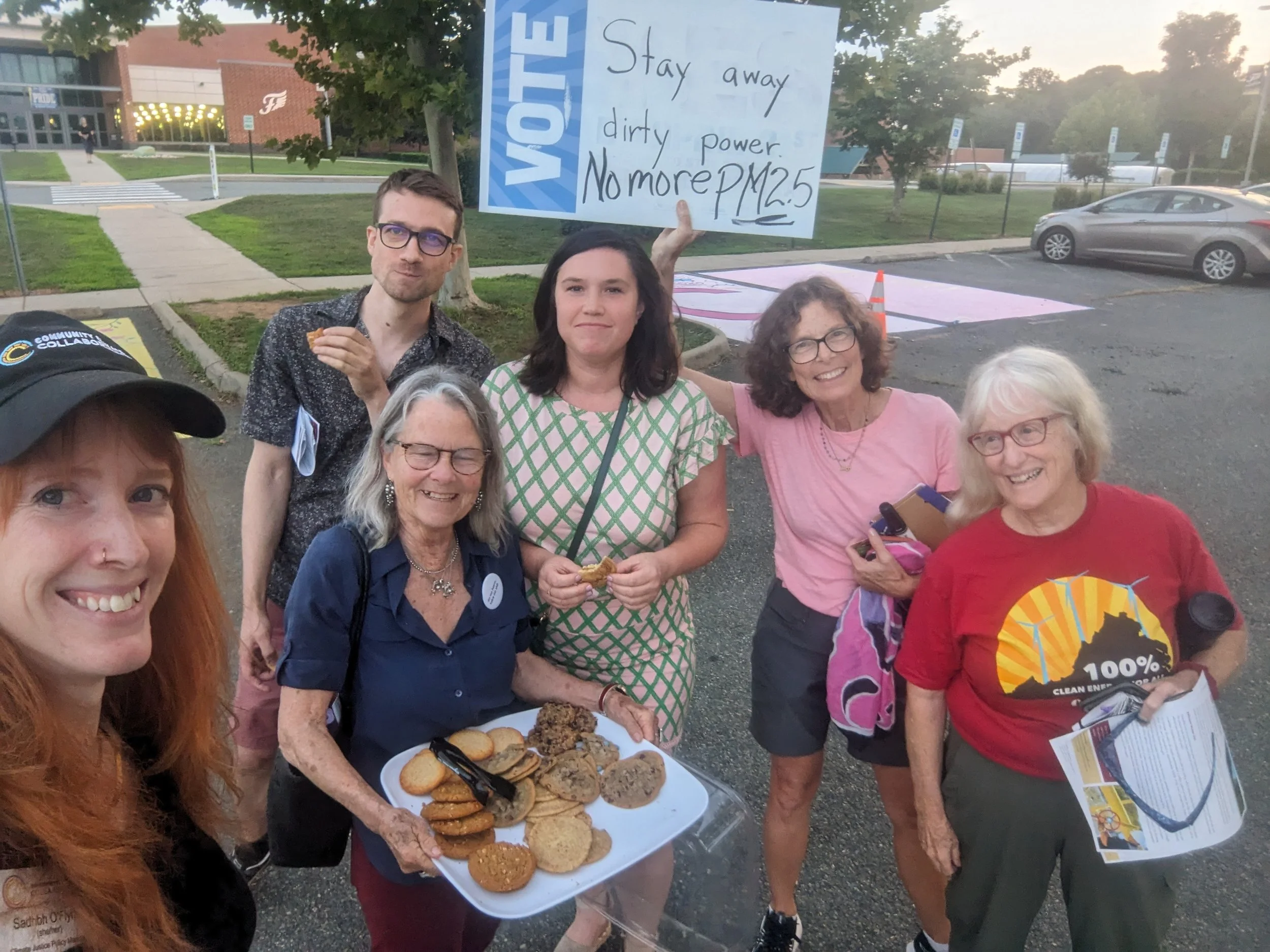
Rejecting a Tenaska representative’s attempt to commiserate with what she’s gone through, Tammy told him, “If you were sorry, you would not represent a company that contributes to this.”
“This is our community [...],” she said, “and we don't want any of it.”
The fight against Tenaska, and what it represents, continues.
