
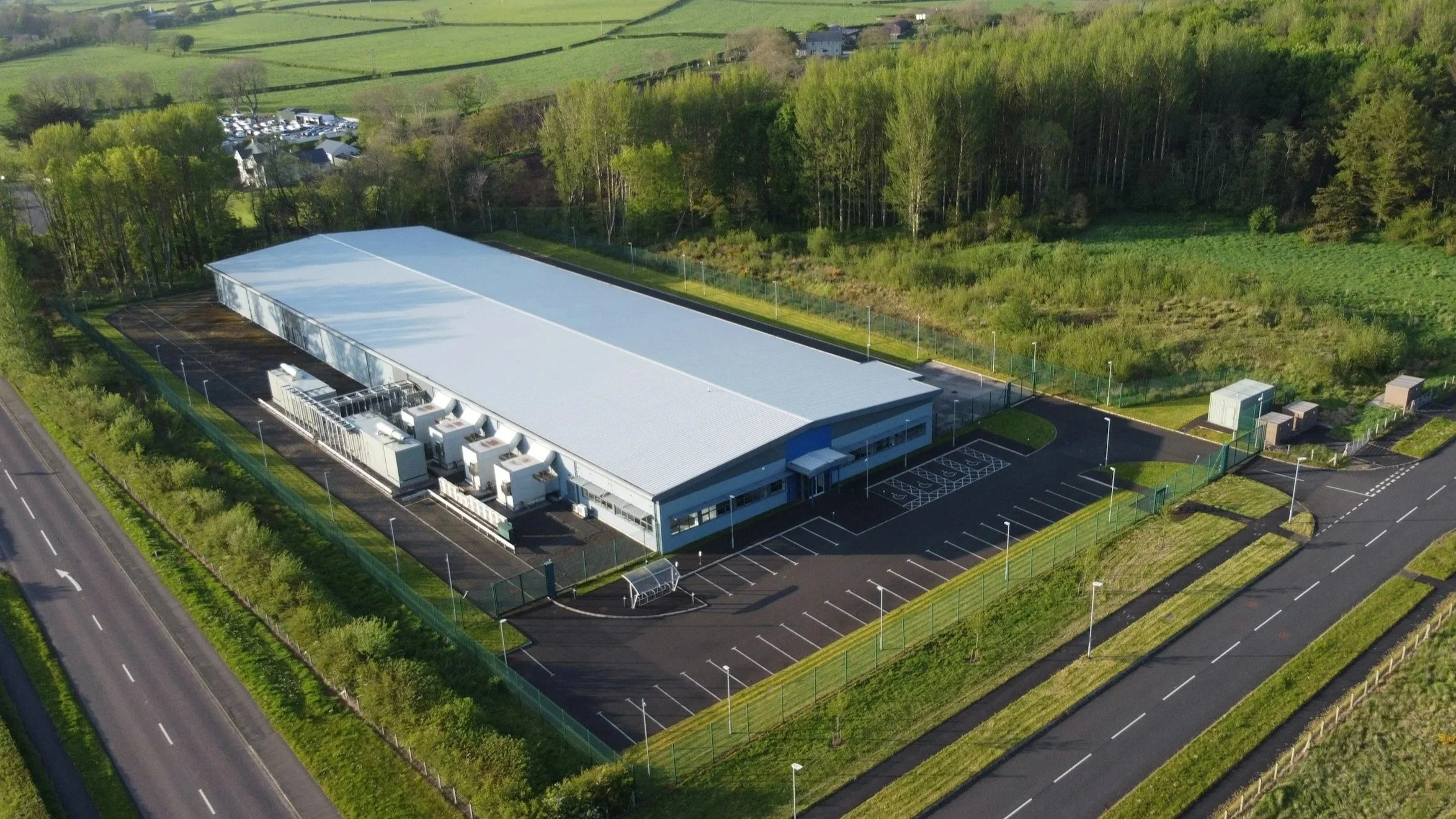
DATA CENTERS
Virginia’s data center industry is growing at a rapid pace. This industry requires a significant amount of energy, water, and land to power its infrastructure, all of which have implications for the climate.
The Community Climate Collaborative supports a statewide moratorium on hyperscale data centers until strong environmental regulation, ratepayer protections, and energy reform measures are put in place to protect Virginians. The investment in fossil fuel infrastructure and large transmission lines built to feed energy demands of data centers – at the expense of everyday Virginians – cannot be continued.
As data centers continue to pop up across the Commonwealth, C3 is committed to helping residents learn about the impacts of data center development, and to connect them with resources in their communities.
Check out our resources below to learn more and take action!
What’s a data center?
First thing’s first:
As our partners at the Southern Environmental Law Center (SELC) put it on their website, “Data centers are large buildings that house computing machines and their related hardware equipment that organizations use to store, process, and distribute the digital information that is behind an ever-increasing number of services we all use every day.”
Data centers have become an indispensable but largely hidden facet of modern life, powering everything we do online from streaming and social media to online banking and the cloud to training artificial intelligence systems.
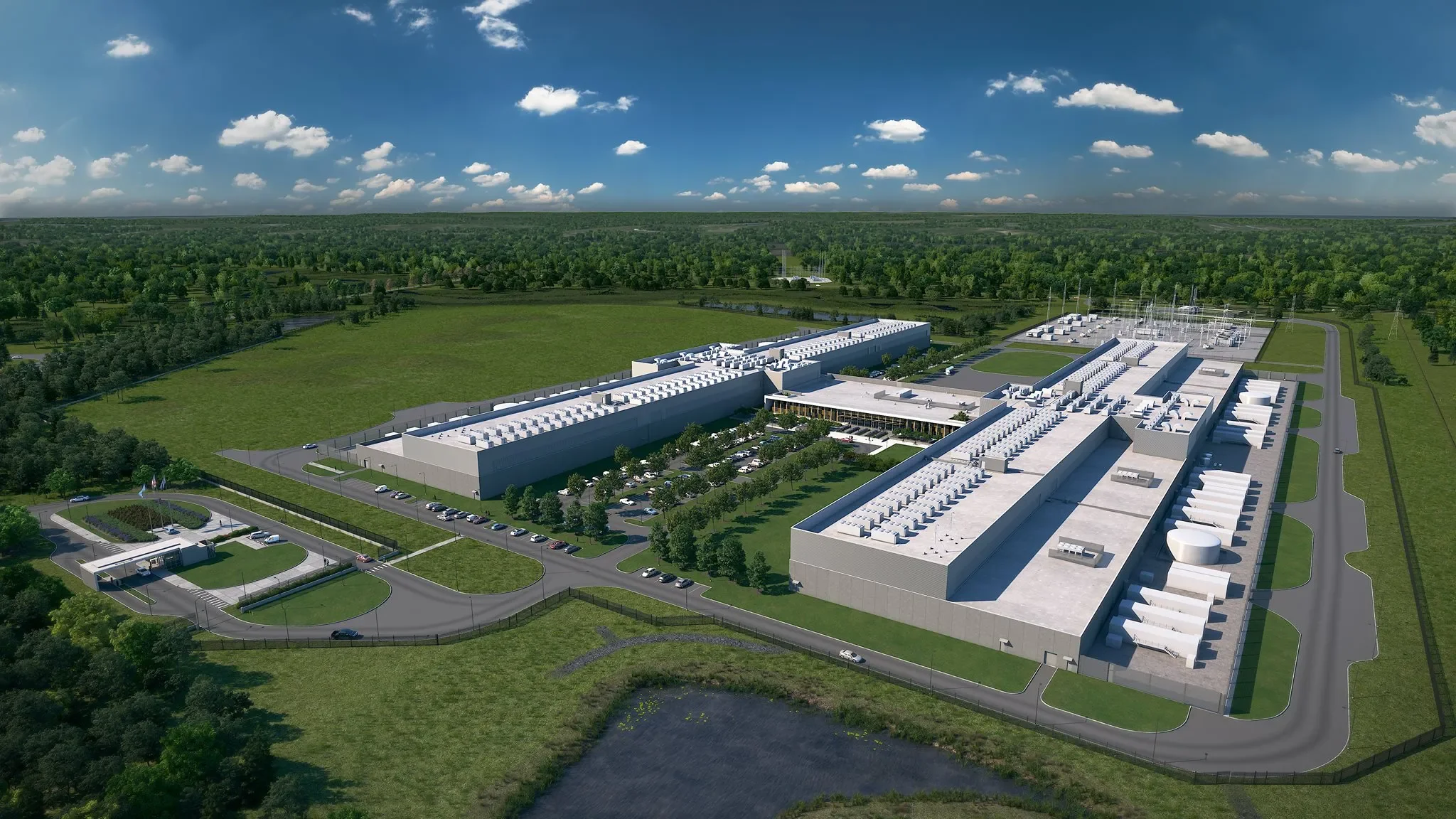
Meta’s new data center in Henrico County, VA. Source: Meta.
Data Center FAQs
Why are there so many data centers in Virginia?
Virginia hosts 13% of the world’s data centers due to favorable policies, infrastructure, and proximity to major internet hubs. Loudoun County (NoVA) alone has the highest concentration globally due to historically allowing data center development by-right, making it a hotspot for the industry. Loudoun County eventually adopted an ordinance in March 2025 to limit future data center development. This was achieved as a result of increasing community pushback over environmental and quality-of-life concerns. Companies tend to flood municipalities with multiple potential projects, hoping that at least one will succeed. In Hanover County, VA, for example, at least four permitting requests have come before the Board of Supervisors in the last year.
How are data centers impacting Virginia’s energy future?
A 2024 JLARC study found that data centers expansion may lead to an immense increase in energy demand and potential strain on the grid. To keep up with generation and transmission infrastructure costs, ratepayers will likely see an increase in their energy bills; the average Dominion customer is estimated to see an increase between $14 to $37 monthly in by 2040 (independent of inflation). However, projected increases in demand remain largely speculative, and are being used to justify Dominion Energy’s plans to build 6 GW of new fossil fuel infrastructure by 2036. Though this deeply conflicts with Virginia’s Clean Energy Act goal of 100% clean energy by 2045, the Virginia State Corporation Commission has declared the plan “legally sufficient” to proceed.
What are the climate impacts of data centers?
Data centers are a heavy-impact land use, requiring significant amounts of electricity and water to power and cool their systems.
High energy demand: U.S. data centers consumed 183 terawatt-hours (TWh) of electricity in 2024. This accounts for more than 4% of the US’ total electricity consumption that year.
Local pollution: Data centers often use fossil-fueled backup generators during peak hours, increasing local air pollution around the data center.
Water use: Hyperscale data centers can consume up to 5 million gallons per day, equivalent to the water use of a town populated by 10,000 to 50,000 people. This can lead to local water strain, especially in areas with limited amounts of freshwater and/or drought.
Google’s planned data center in Botetourt County, VA, is expected to use between 2-8 million gallons per day from the Carvins Cove Reservoir, which also supplies water to local residents.
Are there cleaner alternatives to meet potential data center energy demand?
Yes! Our partners at the Southern Environmental Law Center (SELC) conducted a study in collaboration with Appalachian Voices and Ideasmith that found the projected demand could be met through an aggressive buildout of renewable energy paired with battery storage—without new fossil fuel infrastructure.
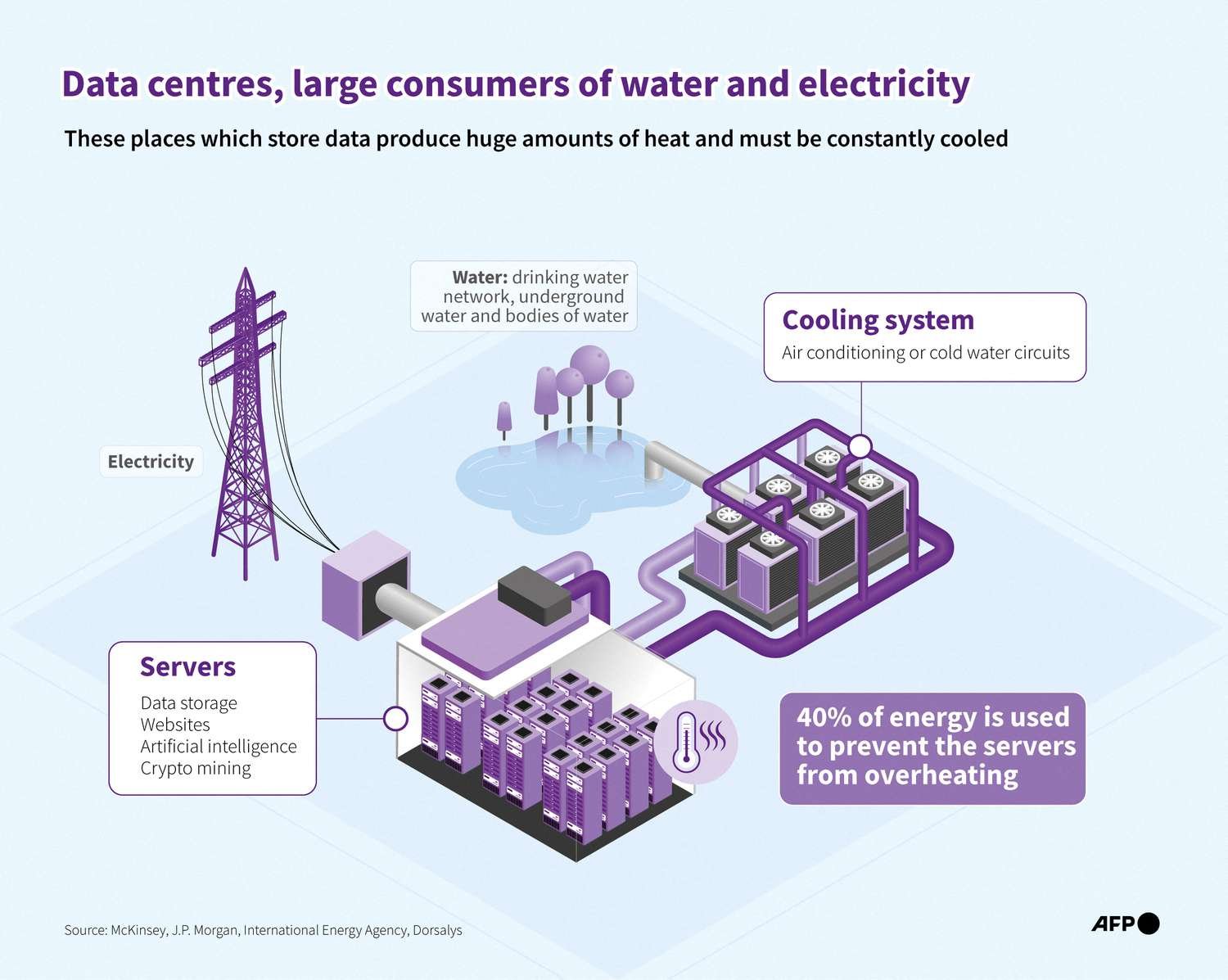
Diagram showing how data center facilities use electricity and water in their power and cooling operations. Source: McKinsey, J.P Morgan, IEA.
How is C3 engaging with data centers in Virginia?
C3 recently advocated against zoning changes that would have allowed data centers up to 500,000 square feet by-right in Albemarle County. Due to public pushback and environmental and health concerns, the Board of Supervisors agreed to indefinitely pause further work on this project.
While there are no existing or proposed hyperscale data centers in Charlottesville, Albemarle County, or Richmond (City) as of summer 2026, C3 supports a statewide moratorium on hyperscale data centers until strong environmental regulation, ratepayer protections, and energy reform measures are put in place to protect Virginians.
PLUG INTO LOCAL ADVOCACY
Looking to get involved in local data center education and advocacy? Check out the resources below!
Charlottesville and Albemarle
Local organizations such as the Piedmont Environmental Council (PEC) created the Virginia Data Center Reform Coalition to bring together organizations and advocates.
Check out their website to learn more!
City of Richmond
Data centers proposals are concentrated in Richmond’s surrounding counties, including Chesterfield, Henrico, Hanover, and Powhatan.
Local groups such as Friends of Hanover (find their website HERE and facebook page HERE) and Friends of Chesterfield have been organizing around data centers and gas plants. Check out their webpages to get involved!
Are you a nonprofit or community group working on data centers in Cville or RVA that we’re missing?
Email us at policy@theclimatecollaborative.org!