

Support an Energy Efficiency Program in RVA!
Amidst rising energy costs and energy burden across Virginia, C3 is campaigning to establish an energy efficiency program in Richmond.
We’re calling on the City to create a program that reduces household energy bills, helps preserve housing and stabilize neighborhoods, and cuts emissions.
We need your support!
Speak!
Write!
Support!
Speak! Write! Support!
The energy efficiency resolution will be introduced in spring 2026. We need your support to get it passed!
UPDATE: The resolution was passed May 11th, 2026. Thanks to all who advocated!
SPEAK AT CITY COUNCIL
Attend the upcoming City Council Meeting and give public comment in favor of the resolution!
DATE AND TIME:
Monday, May 11th, 2026
LOCATION:
Council Chamber, 2nd Floor
City Hall, 900 E Broad Street, Richmond, VA 23219
WRITE YOUR COUNCIL MEMBER
Email your Councilmember to support an energy efficiency program in RVA!
1) Check out C3’s talking points below to learn about energy efficiency and why we need a program in RVA.
2) Find your council member and their contact information HERE.
3) Write your Councilmember an email in favor of an energy efficiency program in RVA. You can use C3’s talking points below!
You can use C3’s email template HERE!
ENERGY EFFICIENCY PROGRAM FAQ
-
Energy efficiency means using less energy to get something done, such as heating a home, lighting a room, or powering a fridge. Many products, appliances, and buildings use more energy than necessary, leading to increased pollution and energy bills. This can be due to multiple reasons, such as:
Structural issues within a building (e.g., leaks, insufficient insulation)
The appliances or technology being used in a building (e.g., space heaters are an inefficient and costly heating source, LED lightbulbs use at least 75% less energy and last up to 25 times longer than incandescent lighting).
Individual behaviors and facilities management practices (e.g., using blinds to block or allow sunlight, programming building thermostats).
All of these factors can help or hurt energy use.
-
Energy use is the leading cause of human-caused climate change, and accounts for over 60% of greenhouse gas emissions in Richmond. Energy-efficient homes use less energy; since less power is needed to meet people’s needs, this reduces pollution and demand on the grid. Since a significant amount of Virginians still rely on fossil fuels for energy, this has major implications for the climate!
-
The need for an energy efficiency program in RVA came from C3’s recent study on energy affordability in Richmond, in which we found that over nearly 1/3 of Richmond households are energy-burdened. During interviews with service providers in the area, many noted that restrictions on funding for weatherization and energy efficiency can limit the types of services that can be provided and prevent folks from getting the full level of support they need.
-
This Resolutions calls on the city of Richmond to design and implement a City-led energy efficiency program. The program will be designed to reduce energy burden and cost of living for households most impacted by climate change and rising energy costs.
The program is intended to offer flexible funding for service providers to tap into to help avoid delaying homes from energy efficiency services. It is intended to incentivize the adoption of energy-reducing and cost-saving technologies such as heat pumps, insulation, and wiring or electrical work needed to reduce energy use.
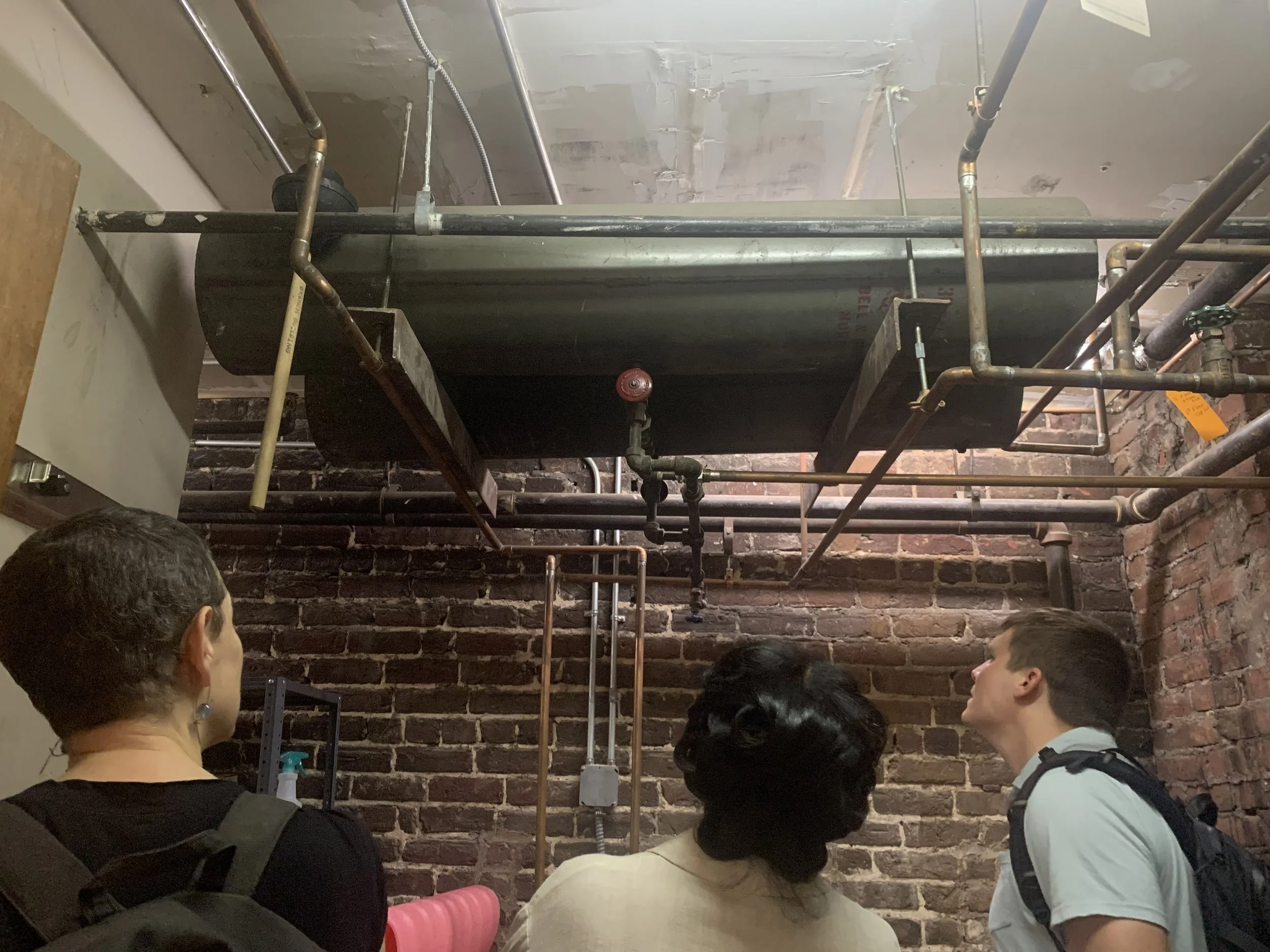
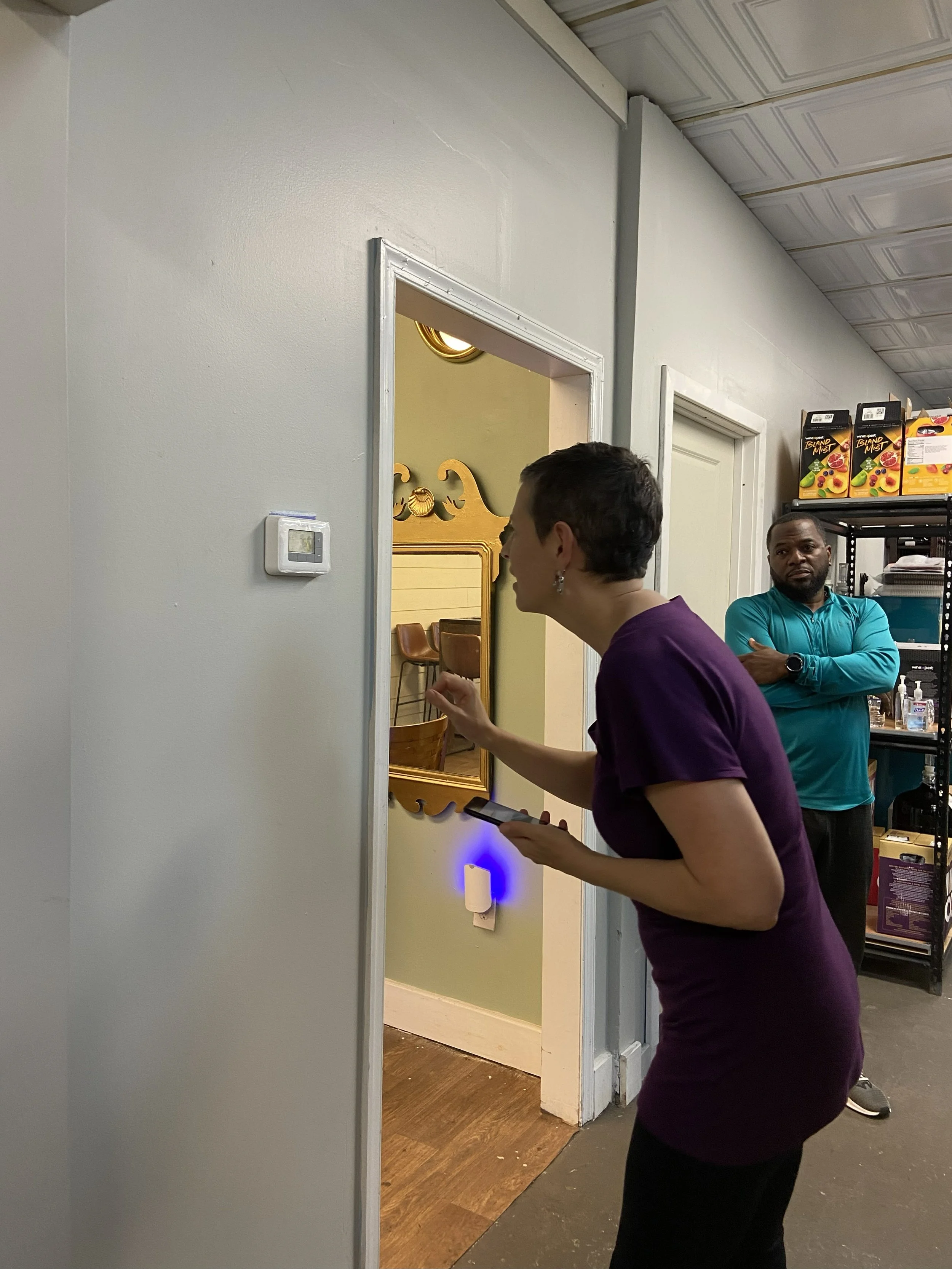
C3 team members Jacqui Bauer and Coles Jennings performing energy audits to locate building inefficiencies.
TALKING POINTS
RESIDENTS ARE FACING RISING ENERGY COSTS WITH LITTLE SUPPORT
Electricity costs are increasing in Virginia, making it harder for households to afford their energy bills.
Virginia is at the forefront of growing energy demands and rising energy costs, driven in part by a surge in data centers and volatile gas prices. Residential energy rates increased 20% statewide from 2021 to 2025.
Federal sources for weatherization and energy are at risk. Recent cuts to federal energy efficiency and assistance programs, such as LIHEAP, highlight the importance of local funding streams that can withstand federal changes.
State and utility funding sources have strict requirements and funding limitations, making it challenging for service providers to braid together enough funds for some projects. This results in dollars left on the table that could be used to benefit Richmond residents! We need a flexible funding pool for providers to tap into.
RICHMOND IS FACING AN ENERGY BURDEN CRISIS
Nearly 1 in 3 Richmond households has a high energy burden.
Over 28,000 households have a high energy burden, meaning they pay 6 percent or more of their income on energy bills.
Energy burden impacts low-income households the most. Nearly all energy-burdened households in Richmond City are low-income, which increases their vulnerability to housing insecurity and the health-related impacts of energy insecurity.
Energy burden is not distributed equitably. The largest concentrations of energy-burdened households are in majority-Black and/or majority-low income neighborhoods in Richmond’s East End, Southside, and parts of Northside.
ENERGY EFFICIENCY SAVES MONEY AND KEEPS PEOPLE IN THEIR HOMES
Energy efficiency saves households money.
Weatherization and energy efficiency upgrades can reduce energy burden by up to 25% and can save households hundreds of dollars annually on their energy bills.
Energy efficiency measures can improve housing affordability, help folks stay in their homes, and prevent displacement.
Energy efficiency upgrades and repairs preserve and maintain housing over time, making it easier for residents to afford to stay in their homes amidst rising housing costs, gentrification, and displacement pressure.
ENERGY EFFICIENCY MAKES HOMES SAFER AND HEALTHIER
Energy efficiency improves the health and quality of life for occupants. Buildings that are inefficient, leaky, and/or lack adequate insulation can have moisture issues, such as mold, as well as ventilation problems that exacerbate respiratory illnesses and asthma. Energy efficiency measures make it easier for households to maintain comfortable indoor temperatures and reduce indoor air pollution.
These health and quality of life outcomes have proven to provide spillover benefits, including reduced absenteeism from school and work.
ENERGY EFFICIENCY REDUCES POLLUTION AND HELPS THE PLANET
Less energy use reduces pollution and benefits the planet. Energy use is the leading cause of human-caused climate change, and accounts for over 60% of greenhouse gas emissions in Richmond. Energy-efficient homes use less energy, reducing pollution and demand on the grid.
Reducing building emissions is a core part of RVAGreen2050, the City’s climate plan. Funding energy efficiency work helps contribute to local climate targets in RVAGreen2050, and creates a more sustainable and efficient building stock for decades to come.